
Cart
0
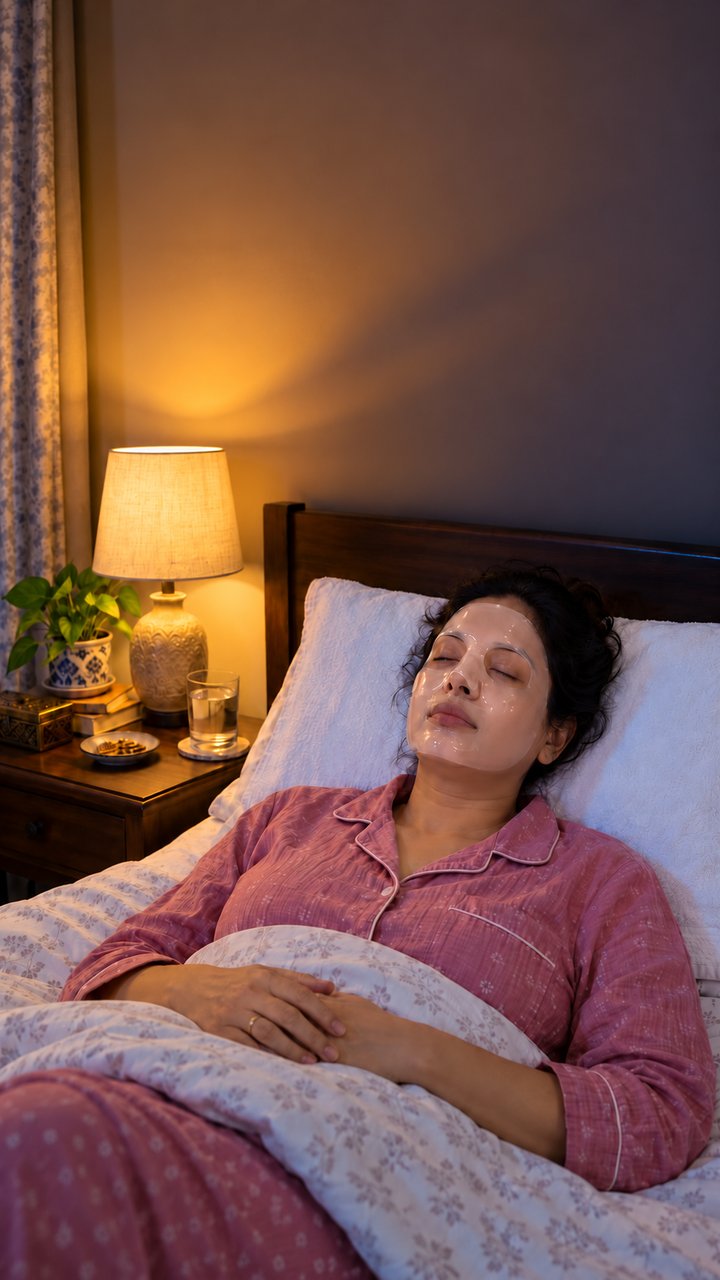
Quick answer: Yes, you can sleep with a collagen mask on if the pack specifically allows overnight use; regular cotton sheet masks should come off after 15–20 minutes. Apply an overnight hydrogel mask about 30 minutes before bed, protect your pillow and choose a 3–4 hour evening session if it slips or feels heavy.
The idea is simple: put a mask on, go to bed, wake up with soft, glowing skin. But the first time you try it, the questions come thick and fast. Will it slide off? Will it ruin my pillowcase? Is it safe to leave on for eight hours? What if I sleep on my side?
Here's everything you need to know about sleeping in a collagen mask, including when you shouldn't.
The Short Answer
Yes, you can sleep in a collagen mask if it's designed for overnight use. Hydrogel collagen masks, the thick, jelly-like kind, are made to stay on for hours. They release serum slowly and don't dry out the way cotton sheet masks do.
No, you shouldn't sleep in a regular cotton sheet mask. Those are designed for 15–20 minutes. Overnight, they dry out completely and can leave your skin drier than before.
If your pack says "overnight" or "wear for 3–4 hours or overnight", you're good to go.
Why Overnight Masking Works
Your skin goes into repair mode at night. It's also when the skin loses the most water, especially in an AC room or during dry winters. An overnight hydrogel mask: Explore the sleep and skin guide for evening habits beyond masking.
- Keeps serum in contact with your skin for hours, not minutes
- Covers the skin lightly, slowing down water loss
- Turns the hours you're asleep anyway into skincare time
That's why people often notice a more obvious difference after an overnight session than after a quick sheet mask.
How to Sleep in a Collagen Mask Without the Mess
1. Apply it 20–30 minutes before bed
Put the mask on while you're still sitting up, reading or scrolling. That gives it time to settle and grip your skin, so it's less likely to slide once you lie down.
2. Get the fit right
Two-piece masks are easier: place the upper half first, then the lower half, and press out air bubbles from the centre outward. A good seal means less sliding.
3. Protect your pillow
Even well-fitted hydrogel masks can leave a little serum behind. Put a clean towel or an old cotton pillowcase over your pillow on mask nights. Silk or satin pillowcases are lovely for hair, but serum can mark them.
4. Tie your hair back
Loose hair sticks to the mask and drags it out of place. A soft scrunchie or a loose bun keeps everything clear.
5. Sleep on your back if you can
Back sleepers have the easiest time. If you're a side sleeper, see the tips below.
Tips for Side and Stomach Sleepers
If you sleep on your side or stomach, the mask has more chance to shift. Try these:
- Use a slightly flatter pillow so less of your face presses into it.
- Wear the mask for three to four hours before bed instead of overnight. Put it on after dinner, take it off when it's mostly transparent, pat in the serum, then sleep.
- Accept a bit of movement. If the mask shifts in the night, the serum you've already absorbed is still working. Peel it off in the morning and pat in what's left.
Our guide on how long to leave a collagen mask on explains how to tell when the mask has done its job.
What It Feels Like the First Time
Knowing what's normal makes the first night much less strange.
When you put it on, the hydrogel feels cool, wet and slightly heavy, a bit like a jelly face pack that doesn't drip. Some people find it instantly soothing, especially after a hot day. Others need a few minutes to get used to the sensation around the nose and mouth.
After 20–30 minutes, the mask warms to your skin temperature and you'll barely notice it. This is a good time to lie down.
During the night, you may wake up once and feel the mask still in place. That's fine. If it has slid off, don't put it back on. Just leave it on the bedside table and pat in whatever's left in the morning.
In the morning, the mask is usually thinner, more transparent, and a little stickier on the inside. Your skin should feel soft and cushioned. A tingly or tight feeling isn't normal, so if you notice that, wear the mask for shorter sessions next time.
Most people find the second and third nights much easier than the first.
When You Shouldn't Sleep in the Mask
Overnight masking isn't right for every night or every person. Choose a shorter session, or skip it, if:
- You've used a retinoid or exfoliating acid that evening. Layering an occlusive mask over strong actives can increase irritation.
- You have an active, inflamed breakout. A long, covered session can feel heavy on angry skin.
- Your room is hot and humid with no fan or AC. Sweat trapped under a mask isn't pleasant.
- You feel stinging, itching or burning. Take it off and rinse with lukewarm water.
- Your skin is broken (cuts, fresh waxing, sunburn). Wait until it heals.
What to Do in the Morning
- Peel the mask off gently, starting near your ears.
- Pat any leftover serum into your face and neck.
- Wash your face with a gentle cleanser if it feels sticky.
- Moisturise and apply sunscreen. Freshly hydrated skin still needs sun protection.
Don't be surprised if your face feels noticeably softer when you wash it. That's the hydration at work.
Overnight Masks vs Sleeping Packs
"Overnight mask" and "sleeping pack" sound like the same thing, but they're not. A hydrogel overnight mask is a physical sheet you peel off; a sleeping pack is a cream or gel you spread on and wash off. We break down the differences in overnight mask vs sleeping mask.
Making It Part of a Calming Night Routine
Mask nights work best when they're part of a relaxing routine instead of a rushed extra step. Dim the lights, put your phone on charge across the room, and give yourself ten quiet minutes. Our self-care night routine has ideas that take less than half an hour.
An Overnight Mask Built for Indian Nights
The Nova Bloom Bio-Collagen Overnight Glass Skin Mask is a two-piece hydrogel mask designed for exactly this. Wear it overnight, or for three to four hours if you're a side sleeper. It contains collagen peptides, hyaluronic acid, niacinamide, galactomyces and centella, and it's free from parabens, sulphates and alcohol. It turns transparent when your skin has absorbed the serum.
Frequently Asked Questions
Will a collagen mask suffocate my skin?
No. Skin doesn't breathe in the way lungs do; it gets oxygen from your blood. A hydrogel mask simply slows down water evaporation for a few hours.
Can I sleep in a mask every night?
You can, but one to three times a week is enough for most people. More often rarely adds extra benefit.
Is it okay if the mask falls off in the night?
Yes. Your skin keeps the serum it has already absorbed. Pat in what's left on the mask and carry on.
Do I need moisturiser after an overnight mask?
In the morning, a light moisturiser and sunscreen are enough. You don't need anything heavy.
Short on time? Flip through the 8-slide visual version of this guide.
If your bedroom feels dry, review the airflow and humidity in our room-heater skincare guide.
Sources
- Ask the Expert: How to Apply Sunscreen – Skin Cancer Foundation
- How to test skin care products – American Academy of Dermatology
Try overnight masking the easy way. The Nova Bloom Bio-Collagen Overnight Mask is ₹299 with cash on delivery across India.

