
Cart
0
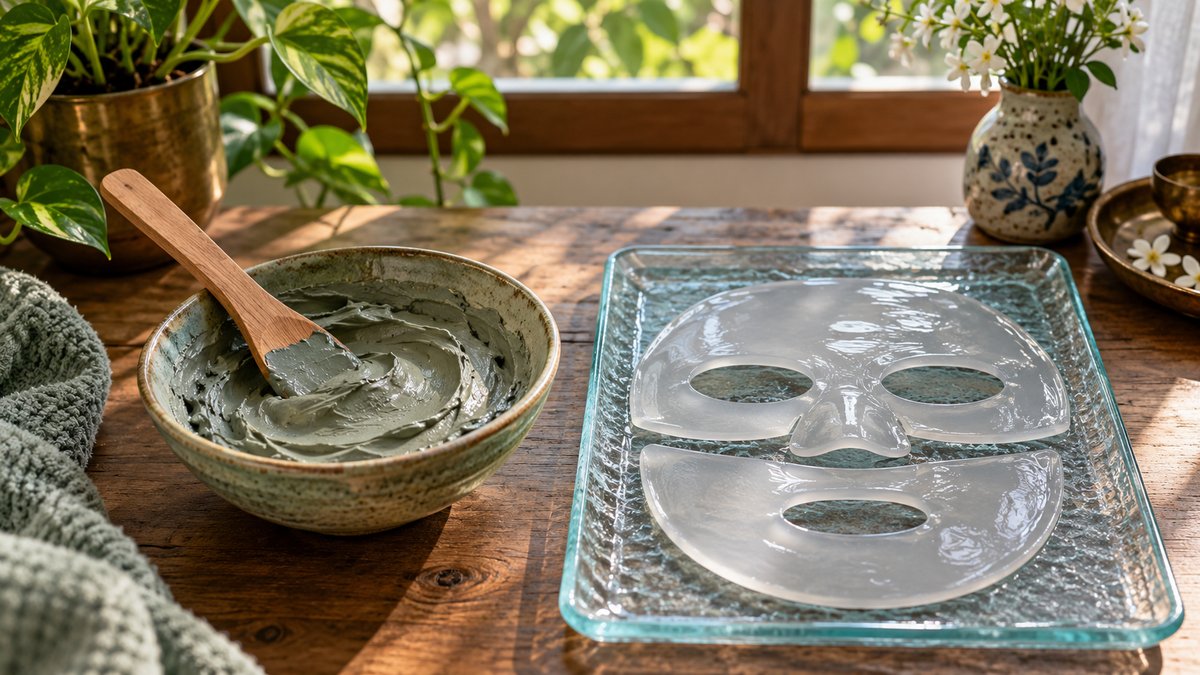
Quick answer: Clay masks generally absorb excess surface oil, while hydrogel masks provide a hydration session through a wet gel sheet. Choose by the job your skin needs, follow each product-specific wear time and removal method, and avoid stacking masks to compensate for tightness; neither replaces daily cleanser, moisturiser or sunscreen.
A shiny nose and tight cheeks can exist on the same face. That is why choosing a mask by skin type alone often leads to disappointment. One area needs less surface oil while another needs gentler care, and neither needs to be treated until it feels stripped.
In the clay mask vs hydrogel mask comparison, start with the task. Clay masks generally focus on absorbing surface oil; hydrogel masks provide a hydration step through a wet gel sheet. Neither is compulsory, and a mask cannot replace cleanser, moisturiser or daytime sunscreen.
Compare the formats before the promises
Formulas vary, so the ingredient list and directions still matter. A clay mask with acids is different from a plain clay formula; hydrogel masks also differ in their ingredients and intended wear time.
| Question | Clay mask | Hydrogel mask |
|---|---|---|
| Main reason to consider it | Surface oil feels excessive | You want a dedicated hydration session |
| Format | Spreadable product, usually rinsed off | Shaped gel sheet, usually peeled away |
| Timing | Follow the stated short contact time | Follow the particular sheet's directions |
| Typical concern | Overdrying or irritation | Poor fit or formula intolerance |
| Best decision rule | Use only where it serves a purpose | Use only when the formula and timing suit |
The right answer can be one, neither or different choices on separate occasions.
Choose clay for a specific oily area
A clay mask is worth considering when excess surface oil is the concern and your skin tolerates the formula. Apply only as directed, often to the areas where you actually want that effect. Dry cheeks do not have to receive the same treatment as a shiny forehead.
Do not wait for painful tightness or deep cracking as proof it is working. Follow removal timing and rinse gently. If skin feels stripped afterwards, reduce use or leave the product out. A mask that absorbs oil does not permanently change your skin type, erase pores or remove the need for moisturiser later.
Choose hydrogel for a hydration session
A hydrogel sheet holds a wet formulation against the face for its intended contact time. This suits someone who enjoys a dedicated hydration step and has room in the schedule. It is not automatically suitable for every sensitive or acne-prone face.
Look at fit, ingredients and directions rather than choosing solely because the packet says collagen or glass skin. Dense facial hair can prevent contact, while an active rash is a reason to avoid experimentation. The hydrogel and sheet-mask comparison explains how different wet mask materials change handling without making the format a medical treatment.
Separate oiliness from tightness
Skin can look shiny and still feel dehydrated or irritated. Repeating clay sessions because the forehead produces oil can worsen the feeling of tight cheeks. Check how skin feels after cleansing before deciding that every shiny patch needs stronger oil control.
- Notice whether the cheeks sting or flake.
- Check whether the cleanser leaves a tight finish.
- Use a light moisturiser if heavy cream feels greasy.
- Avoid increasing mask frequency during an irritation flare.
The oily-skin mask guide offers ways to keep hydration manageable. Persistent painful bumps or a rash need assessment, not a stronger masking schedule.
Give dry skin permission to skip clay
If your skin already feels rough and tight, oil absorption is unlikely to be the first job to prioritise. Start with gentle cleansing and a moisturiser that suits your skin. A hydrating mask can be an extra when tolerated, but more contact time is not always better.
Use the dry-skin mask guide to think about the moisturiser afterwards. Do not scrape off flakes before applying a sheet or rub them away after clay. Cracked, bleeding or persistently itchy skin deserves medical advice. Changing mask type cannot identify the underlying cause of ongoing dryness or an inflammatory rash.
Follow the exact hydrogel instructions
The Nova Bloom Bio-Collagen Overnight Glass Skin Mask is a two-piece, single-use hydrogel with collagen peptides, hyaluronic acid, niacinamide, galactomyces and centella asiatica. It is a hydration extra rather than an oil-removal treatment.
Apply to a clean, dry face after toner if used, press out air and wear overnight or for 3–4 hours until transparent. Peel away, pat in serum without rinsing and moisturise. Use 1–3 times weekly on separate nights from strong AHA/BHA and retinoids. Remove and rinse if it stings or irritates. Do not transfer its timing to a different mask formula.
Keep both formats away from irritated skin
Fresh shaving cuts, a sunburn, an active rash or skin that burns with water are poor conditions for a mask trial. Leave cosmetic extras out and use tolerated basic care while seeking advice for significant or persistent symptoms.
Fragrance-free or alcohol-free wording does not guarantee that a product will suit every person. Follow testing guidance and introduce new formulas separately. If swelling, blistering or marked burning occurs, remove the product gently and seek appropriate medical help. Neither clay nor hydrogel needs to hurt to be useful, and discomfort should not become a test of commitment to the routine.
Do not stack masks to correct each other
You do not need clay first and a hydration sheet afterwards to repair the tight feeling. If one product consistently leaves skin uncomfortable, reconsider it rather than automatically buying another to compensate.
For combination skin, targeted use on separate occasions is easier to assess than a complicated full-face sequence. Keep strong acids and retinoids away from Nova Bloom mask nights. Do not layer a sheet over clay or leave clay beneath it; each product is designed for its own application and removal. A weekly plan should have room for ordinary cleanser-and-moisturiser evenings instead of assigning every night a corrective treatment.
Use removal as part of the comparison
Choose a format you can finish properly in the place where you will use it. Clay needs access to water and a gentle rinse. A hydrogel sheet needs time, a suitable fit and disposal after use.
- Check the application and removal directions before opening.
- Keep a clean towel and moisturiser nearby.
- Set a reminder if the product has a short contact time.
- Avoid scrubbing during removal.
- Dispose of single-use sheets after the session.
Do not rinse and save a used hydrogel mask. Do not add water to a drying jar of clay to stretch it unless its directions specifically permit that preparation.
Budget for frequency as well as packet price
A multi-use clay container and a single-use hydrogel packet cannot be compared by shelf price alone. Think about the amount used, expiry after opening, hygiene and how often the product genuinely fits your routine.
If the choice competes with buying sunscreen or moisturiser, fund the daily essentials first. There is no requirement to own both formats. Avoid a large bundle before testing; unused extras can expire.
Match the decision to Indian weather
Mumbai humidity can make a rich skincare stack feel heavy, while an AC office leaves cheeks dry. Delhi winter changes the same person's needs again. Adjust the routine to what your skin is doing instead of making clay a summer rule and hydrogel a winter rule.
After a sweaty commute, cleanse as needed and replace daytime sunscreen. Sweat alone does not create a need for clay. In a dry room, moisturiser remains central. Consider travel, access to a basin and bedtime too.
Assess the result without chasing extremes
After a session, note softness, tightness, stinging and how the skin feels later. A completely matte face is not automatically healthier, and a glossy finish is not proof that every skin concern has improved.
Repeat within directions if the experience suits you. If it adds little, keep the routine smaller. Persistent acne, dark marks or flaking need their own assessment. Choose a product that serves your current need and fits your schedule.
Frequently Asked Questions
Is clay better for all oily skin?
No. Consider dryness, sensitivity and the whole formula. Some oily faces do better with gentle daily care and no mask at all.
Can a hydrogel mask clean my pores?
It is not a replacement for cleansing or acne treatment. Use it as directed for a hydration session rather than expecting it to extract buildup.
Do I need both masks every week?
No. Choose according to a real need and your tolerance. Keep the basic routine consistent, and leave either format out when it adds no value.
Sources
- Comprehensive assessment of the efficacy and safety of a clay mask in oily and acne skin – PubMed
- Contact reactions to cosmetics – DermNet
Choose hydration when that is your skin's next step. Explore the Nova Bloom Bio-Collagen Overnight Mask, ₹299 with cash on delivery available.

